Hetu and Luoshu: The Two Number Diagrams Behind the I Ching

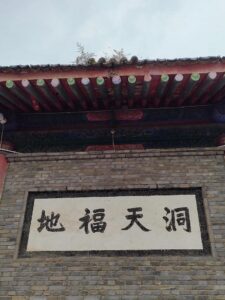
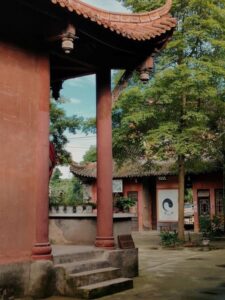
Traditional Chinese temple with red walls and calligraphy, serene and mystical atmosphere.

Imagine standing on the muddy banks of the Yellow River in ancient China. According to legend, a dragon-horse emerged from the swirling waters, carrying a mysterious pattern of dots on its back. This was the Hetu (River Map). Later, near the Luo River, a sacred tortoise crawled out of the water with another set of … Read more

The Zhou Yi (I Ching): The Oldest Manual for Deciding

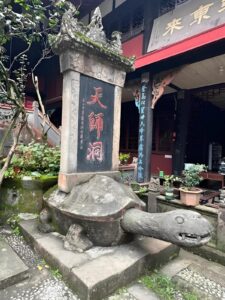
Ancient Chinese temple stone monument with calligraphy and turtle sculpture.

A 3,000-year-old book sits quietly at the foundation of Chinese thought — part decision manual, part philosophy, part literature. The Zhou Yi (pronounced “JOH-yee”), usually introduced in the West as the I Ching or “Book of Changes,” is that book. Most people who have heard of it have never actually opened it, and many of … Read more

Yin and Yang: The Quiet Rhythm Behind Everything Chinese

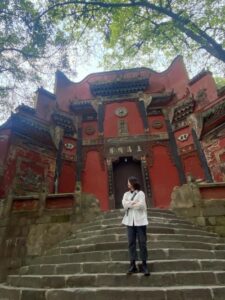
A person stands on stone steps before a vibrant red temple with intricate architecture and

If you have ever looked at the famous Taijitu symbol—the black and white circle with two dots—you might have interpreted it as a battle. One side is fighting to conquer the other. Light versus dark. Good versus evil. But in traditional Chinese thought, this interpretation misses the entire point. Yin and Yang are not enemies; … Read more

The Taijitu (Yin-Yang Symbol): What the Swirl Actually Says

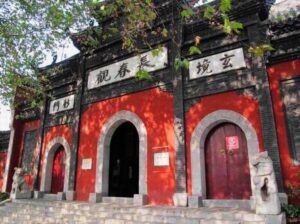
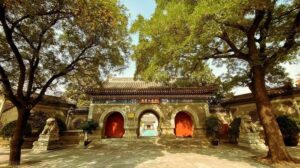
Ancient temple gate with red doors and stone lions under lush trees.

You have seen it everywhere: on t-shirts, in yoga studios, and tattooed on forearms. It is the Taijitu (tài jí tú), commonly known as the Yin-Yang symbol. For many, it is a decorative motif representing “balance.” But if you look closer, this diagram is not just art; it is a sophisticated map of change. It … Read more

Wu Xing: The Five Phases Are Verbs, Not Elements

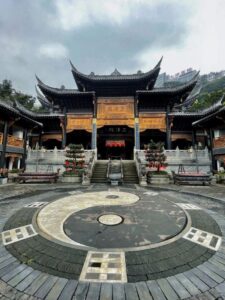
Traditional Chinese temple with yin-yang courtyard under cloudy sky.

If you have ever taken a quick online BaZi quiz and been told, “You are Wood,” you might have imagined yourself as a sturdy oak tree. You may think this means you are stubborn, rigid, or simply like a plant. This is one of the most common misunderstandings in Western approaches to Chinese metaphysics. It … Read more

Qi, Li, Shen: Three Words That Unlock Chinese Thinking

Traditional temple overlooks lush green landscape under cloudy sky.

Have you ever felt like the ancient wisdom of BaZi (Eight Characters) is locked behind a door, and you’re missing the key? It’s not just about memorizing dates or learning which element clashes with which. The real magic lies in understanding three foundational concepts that permeate everything from Traditional Chinese Medicine (TCM) to metaphysical analysis: … Read more

The Ba Gua (Eight Trigrams): The Oldest Binary Map of Change

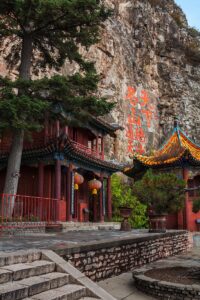
Traditional Chinese temple nestled against a rocky cliff with red lanterns and calligraphy

Its origin story reaches even further back, to the Hetu (River Map) and Luoshu (Luo Writing) — two ancient dot diagrams named in the pre-Qin classics and honored in tradition as the seed from which Fu Xi drew the trigrams: Heaven produced the pattern, and the sage mirrored it. Their arrangements of dots carry the … Read more